
Author Story Article Input Questionnaire
1. How did your journey as a writer begin? What inspired you to start writing?
Author: I never set out to be a writer. I am a doctor. That is what I trained for, that is what I do. But when you spend ten years in hospitals, you hear things. A man waiting outside the ICU at 3 AM tells you about the wife he never apologised to. A nurse on her break mentions, almost casually, that she sends money home every month to a father who does not know she is a nurse and not a teacher, because he would not have approved. These are not stories people plan to tell you. They slip out. And I started writing them down, first in notebooks, then on my phone, simply because the weight of carrying them was becoming too much. Writing was not inspiration. It was relief.
2. What genres, themes, or subjects do you prefer to write about, and why?
Author: I write about love. But not the kind that makes it to Bollywood. The quiet kind. The love between two people who cannot be together because of family, or class, or timing, or geography, or simply because India decided for them before they had a chance to decide for themselves. I write about what happens after the decision is made. The years. The silence. The yellow roses bought on the same anniversary for the eleventh time. I am drawn to the space between what people feel and what they are allowed to say, because that space, in India, is enormous, and almost no one writes about it.
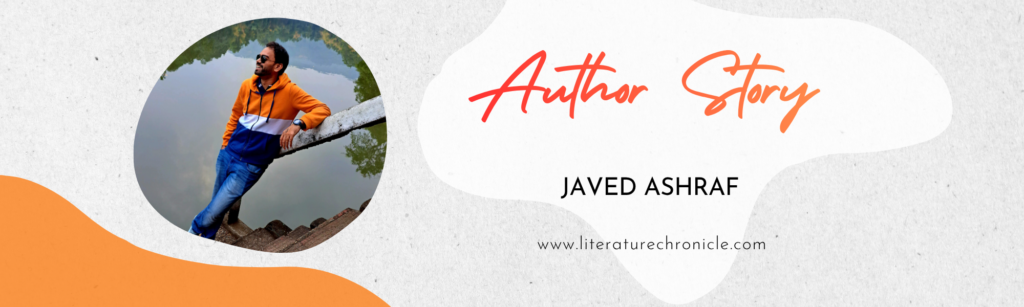
3. Was there a particular book, author, or incident that influenced your decision to write?
Author: Premchand. Specifically, Godaan. I read it as a young man and it broke something in me. Here was a writer telling the story of a farmer who wants one cow, just one, and the entire machinery of society conspires to deny him that single, reasonable thing. I remember putting the book down and thinking: this is what literature is for. It is not for grand ideas. It is for small, specific, unbearable truths. Manto did the same thing with Partition. Ismat Chughtai did it with desire. Later, Jhumpa Lahiri showed me that you could write about Indian lives in English without losing the texture. Her stories taught me that restraint is not the opposite of emotion. It is how emotion survives on the page.
4. What challenges or obstacles have you faced in your writing journey, and how did you overcome them?
Author: Time. I am a working doctor. I do not have the luxury of a writing retreat or a sabbatical or even a full Sunday. I write early in the morning before the hospital opens, in a chair by the window, with one cup of chai that goes cold before I finish it. Some mornings I get 300 words. Some mornings I get nothing. The other challenge was permission. I was not raised to write about feelings. I was raised to study, to work, to be competent. Writing a story about a man who cries in a cotton field felt, at first, like a transgression. I overcame it the only way I know how. I kept writing. The stories were louder than the discomfort.
5. Can you recall a memorable moment or incident related to your writing that deeply impacted you?
Author: There was a clerk at a government hospital where I once worked. He was in his sixties. Every morning he climbed three floors to bring chai to his wife, who was a patient in the long-term ward. She had dementia. She did not recognise him most days. He came anyway. One day I asked him why he still came every morning, and he looked at me as if I had asked the strangest question in the world and said: Because she likes one and a half sugars, and the nurses put two. That sentence became the seed of the first story in Almost Enough. I did not write it for years. I was not ready. But I never forgot it, and when I finally sat down to write, that sentence was the first thing that came out.
6. What message, thought, or emotion do you try to convey through your books or poems?
Author: That love is not always enough. And that this is not a tragedy. It is just the truth. In India, we are taught that love conquers all, that if you love someone hard enough, the family will come around, the caste will not matter, the distance will shrink. That is a beautiful idea and it is mostly a lie. What I have seen, again and again, is people who loved deeply and correctly and were still defeated by timing, by geography, by a mother’s face at the breakfast table. I want readers to feel recognised. I want them to read a story and think: this happened to someone I know. This happened to me. That recognition, that feeling of being seen, is the closest I can come to being useful as a writer.
7. Which of your writings is closest to your heart, and why?
Author: Soil. The story about the Vidarbha farmer. Because it is the least fictional thing I have written. I grew up hearing about farmer suicides the way city people hear about weather. It was background noise. Then I met a woman whose husband had died the day before their daughter’s first salary was credited to the bank. One day. Twenty-four hours. And after he was gone, the post office clerk showed her the money order receipts, and on each one, over three years, the husband’s handwriting of their daughter’s name had gotten better and better. He had been practising. A man with a Class 7 education, practising his daughter’s name on scrap paper so it would look right on the form. That detail is not invented. That is the kind of thing life gives you, and all you can do as a writer is try not to ruin it.
8. If you had to describe your identity as a writer in one line or belief, what would it be?
Author: I am not a writer. I am a man who listens, and the listening left marks, and the marks became a book.
9. How do you see yourself evolving as a writer in the future? Are there any upcoming projects or genres you wish to explore?
Author: I want to write a novel. Almost Enough taught me how to enter a life and leave it in twenty pages. I want to learn what happens when you stay. My next book is called The Distance Between Prayers. It is a love story set against the backdrop of war, about two people separated by a conflict neither of them chose, trying to find their way back to each other across borders that did not exist when they first fell in love. It is a different kind of heartbreak from Almost Enough. Bigger. Louder. But at its centre, it is still about the same thing: two people, one distance, and the question of whether love is strong enough to survive what the world does to it. I am still writing it. It is not ready. But it is coming.
10. What advice or message would you like to give to aspiring writers or readers?
Author: Write the thing that embarrasses you. Not the thing that sounds literary, not the thing your English professor would approve of, not the thing that looks good on a book cover. Write the thing that makes you put your pen down and stare at the wall because you cannot believe you are admitting it. That is where the real writing lives. And to readers: read slowly. Especially short stories. A short story is not a novel you can rush through. It is a single conversation. Give it the attention you would give a person sitting across from you, telling you the truest thing they know. One story a night. With chai. With the window open. That is all I ask.